Leaving Made You American: How Living Abroad Turns Your Identity Inside Out
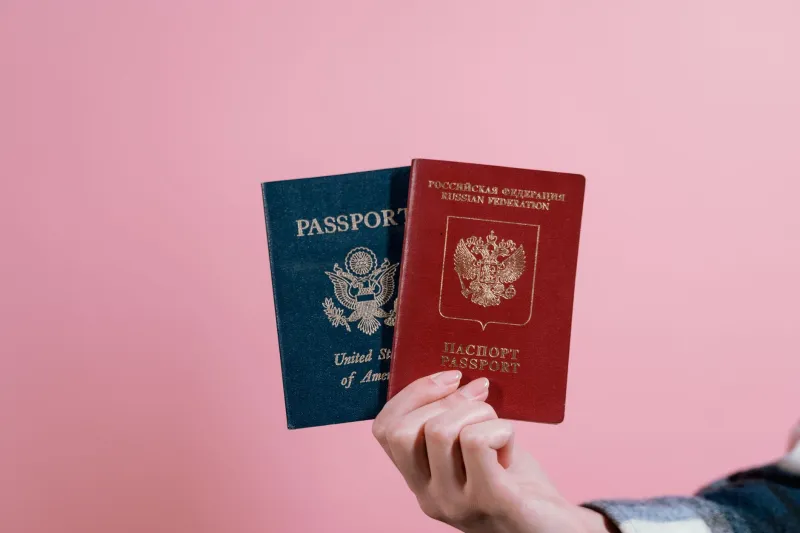
Back home, you probably never thought much about being American. It was just... the water you swam in. You complained about politics at Thanksgiving, rolled your eyes at the commercialism, maybe even cringed a little when someone played Lee Greenwood at the Fourth of July barbecue. American-ness felt like a default setting, not a defining trait.
Then you moved abroad. And suddenly, it's the first thing anyone wants to talk about.
The Moment It Hits You
It usually starts small. A coworker in Berlin asks you to explain why Americans are so loud. A neighbor in Lisbon wants to know if you personally own a gun. Someone at a dinner party in Tokyo asks, with genuine curiosity, what Americans actually eat every day. And there you are, chopsticks in hand, realizing that you've been elected — without your consent — as the unofficial representative of 335 million people.
For a lot of expats, this is the moment the identity shift begins. You never had to defend peanut butter sandwiches before. You never had to explain tipping culture, or small talk, or why Americans smile at strangers. These things were just normal. But normal is a local phenomenon, and the second you cross enough time zones, your normal becomes someone else's fascinating anthropology project.
And weirdly? That's when you start to own it.
Defending Things You Used to Mock
Here's the paradox nobody warns you about: living abroad can turn even the most self-deprecating American into an unlikely patriot. Not the flag-waving kind, necessarily — more like the kind who finds themselves genuinely explaining why American optimism isn't naivety, or why the chaos of a New York deli is actually a form of beautiful efficiency.
You might catch yourself defending things you used to roll your eyes at. The relentless customer service culture. The obsession with ice in drinks. The fact that in America, you can call your boss by their first name on day one and nobody blinks. These quirks, seen from the outside, start to look less like embarrassing Americanisms and more like actual cultural values — informality as a form of respect, enthusiasm as a social contract, directness as a kind of honesty.
That doesn't mean you've stopped being critical. It just means the criticism has gotten more nuanced. Distance gives you that. You can hold two things at once: this is genuinely broken and also, here's what I actually miss about it.
The Accidental Ambassador
Expats become cultural translators whether they want to or not. It's an unofficial job description that comes with the territory. You're the person your international friends ask when they want to understand why Americans are so litigious, or so obsessed with college football, or so uncomfortable with silence. And you're the person your family back home asks what it's really like in [insert your country here].
Playing both sides of that translation is exhausting and illuminating in equal measure. It forces a kind of intellectual honesty that comfortable proximity rarely demands. When you have to articulate why something is the way it is — not just accept that it is — you learn things about your own culture that years of living inside it never taught you.
Some expats find this energizing. Others find it relentless. Most find it both, depending on the day.
What Distance Actually Clarifies
There's a reason the phrase "you don't know what you've got till it's gone" became a cliché — it keeps being true. Living abroad has a way of sharpening your sense of what home actually means to you, as opposed to what you assumed it meant.
For some people, that means discovering a genuine warmth for things they'd taken for granted: the particular light of a late-summer afternoon in the Midwest, the way Americans instinctively make space for strangers in a crisis, the cultural shorthand of a shared reference — a Seinfeld quote, a Springsteen lyric — landing perfectly with someone who gets it.
For others, distance clarifies absence. The things you thought you'd miss, you don't. The things you never expected to miss — the sound of American English overheard on the street, the specific smell of a Costco, the ability to make a joke and have it land without explanation — hit differently than you thought they would.
Neither reaction is more valid than the other. They're both just data points in the ongoing project of figuring out who you are and what you're made of.
Identity Is a Moving Target
Here's what living abroad teaches you, eventually: identity isn't a fixed thing you carry around in your passport. It's something you're constantly negotiating — with your environment, with the people around you, with the version of yourself you left behind and the version you're becoming.
Being American abroad doesn't mean being a stereotype or a spokesperson. It means being a person with a specific cultural background navigating a world that's constantly asking you to explain yourself. That's uncomfortable. It's also, if you let it be, kind of extraordinary.
The expats who come out the other side of that negotiation with something real — a clearer sense of what they value, what they want to carry forward, what they're willing to leave behind — tend to be the ones who leaned into the discomfort instead of deflecting it.
You Didn't Lose Your Identity. You Found It.
The expat paradox isn't really a paradox at all, once you sit with it. You feel more American abroad because, for the first time, you're actually seeing it — the way you can only see something clearly when you've stepped far enough back to get it in frame.
Home looks different from a distance. So do you.
And sometimes, that's exactly the view you needed.